01
No made-up score
The “ATS score” became 13 readability checks. Each one shows the lines it is about and a fix, so a user can see why, not just how much.
Cut: the single score
AI product · rebuild of my own v1
Show your real experience, clearly.
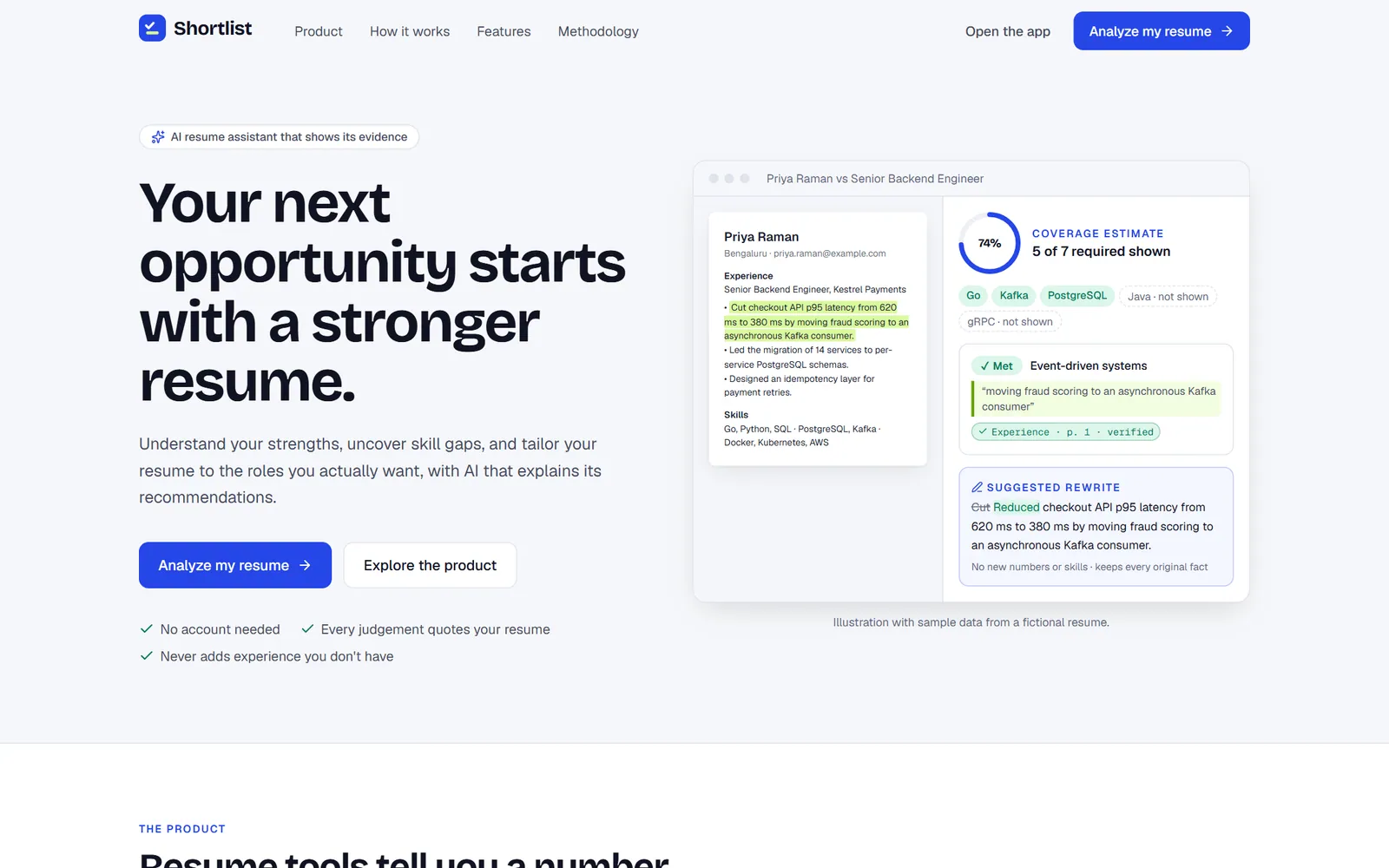
A resume assistant that judges a resume against a job ad requirement by requirement, quotes the resume as evidence for every verdict, and suggests rewrites that are checked for invented facts.
1The problem
Resume tools hand out a mysterious score and rewrite bullets with numbers you never achieved.
2My role
Product direction, UX and UI, design system and evaluation design. Built with Claude Code under my direction.
3Outcome
Live. Matching accuracy went from 0.22 to 0.91 on 74 labelled requirements, with no missing requirement marked as met.
01
Resume tools hand out a mysterious “ATS score” and rewrite bullets with numbers you never achieved.
My own first version was guilty of both: its score gave 10 points to any resume, and its job matching was 37 hard-coded substrings, so “ai” matched inside “maintain”.
So the rebuild started from one question: what would a resume tool look like if every judgement had to show its evidence?
Who it's for
Job seekers tailoring one resume to a specific job ad, who want to know what a recruiter will actually find, not a number.
02
Status, honestly
Desk research and my own v1 audit. No usability testing yet; a study plan is written in the case study.
03 · User flow
04
01
The “ATS score” became 13 readability checks. Each one shows the lines it is about and a fix, so a user can see why, not just how much.
Cut: the single score
02
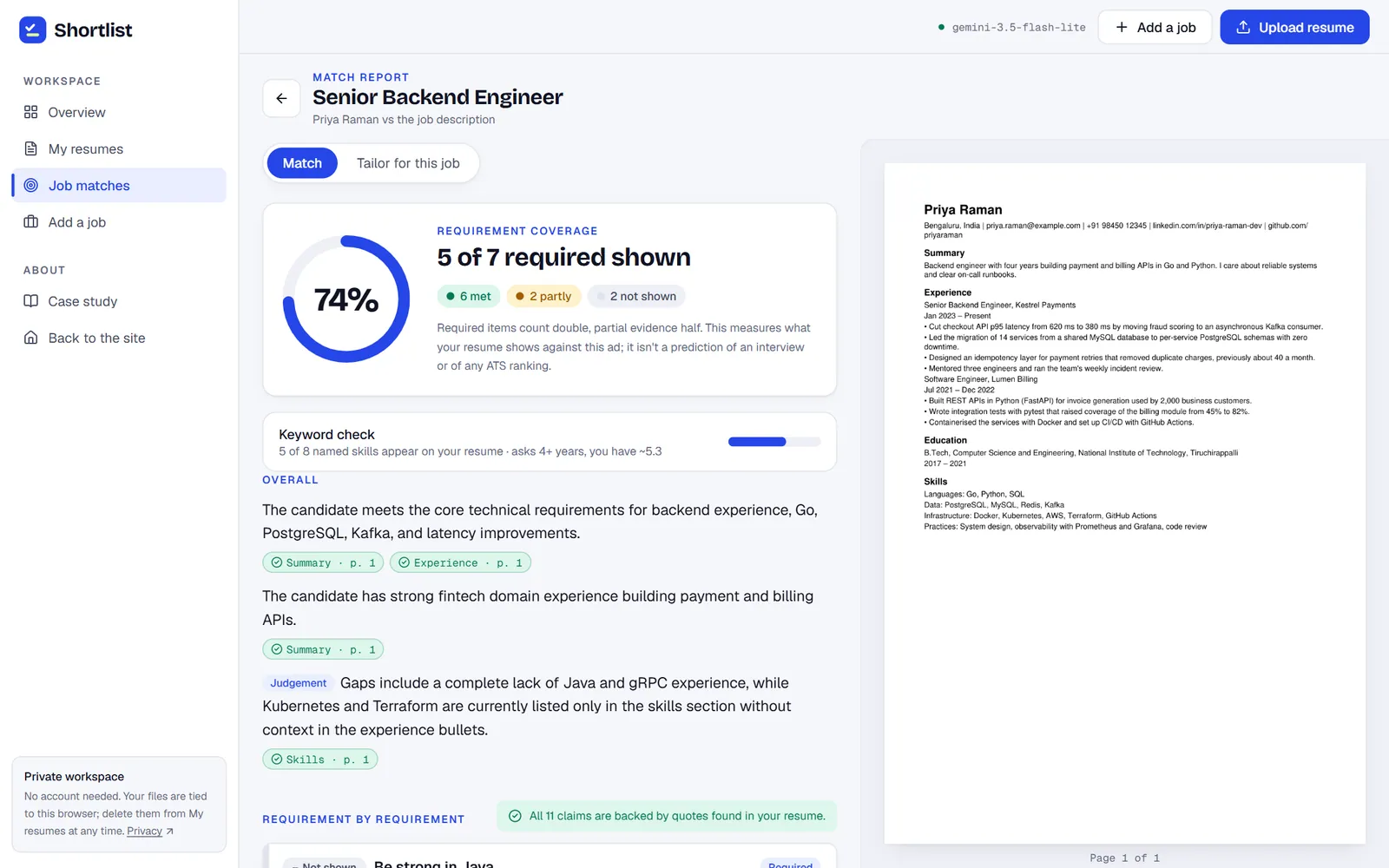
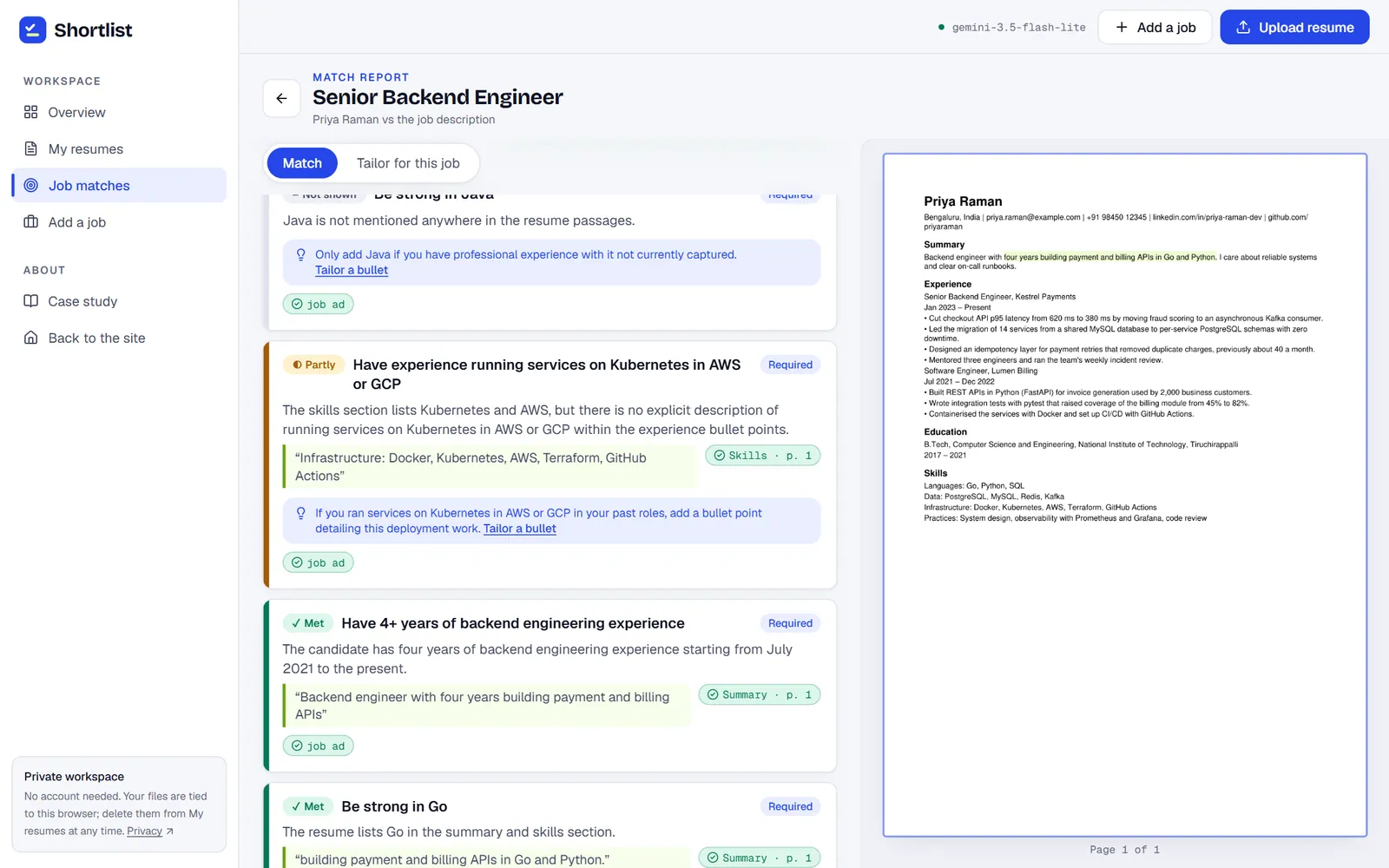
The AI decides met, partly or not shown for each requirement, with quotes. Coverage is computed in code: required items count double, partial evidence half.
03
Every verdict quotes the resume, and each quote is checked against the file. A “met” whose quote can't be found is downgraded to “partial”, in front of the user.
04
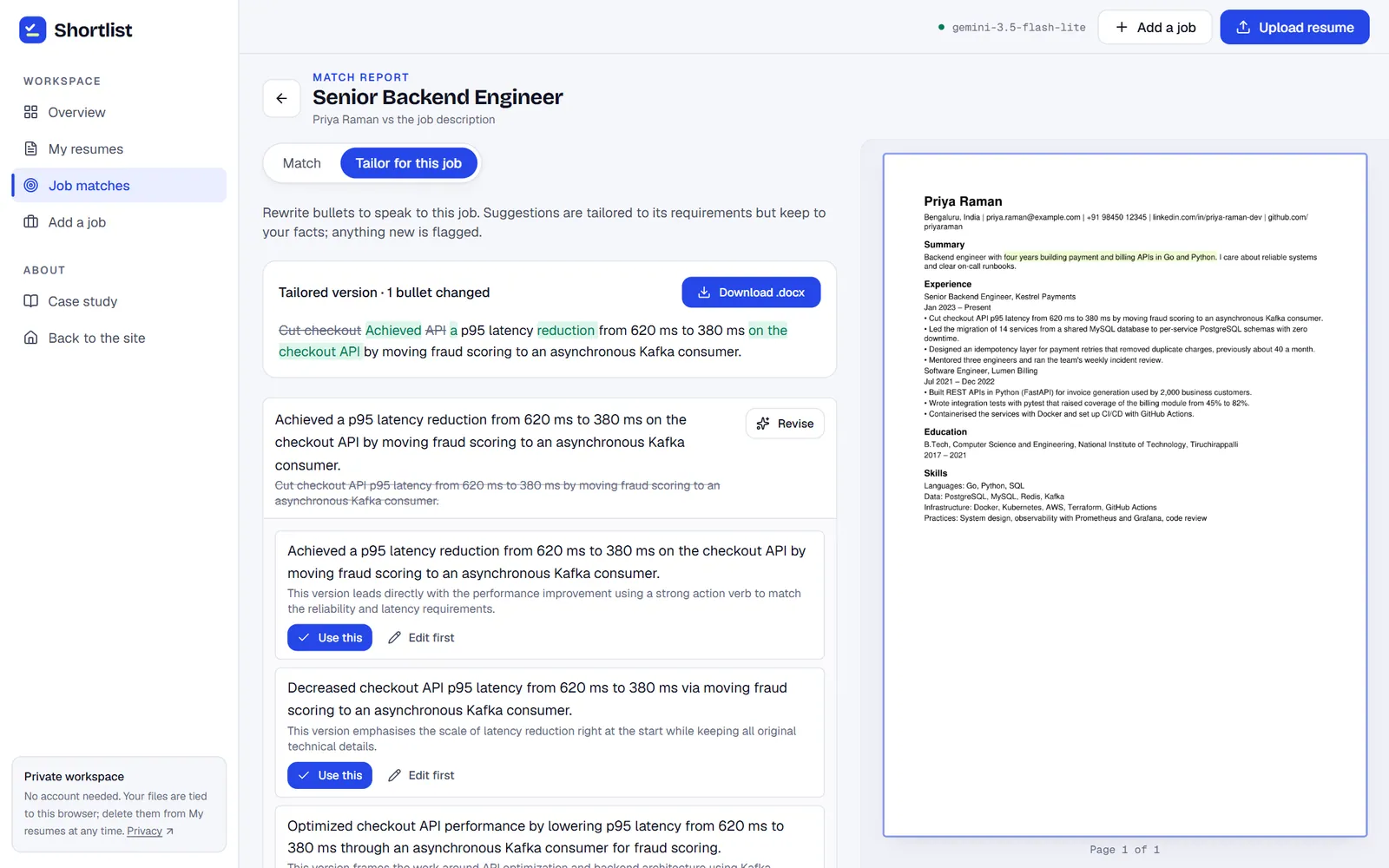
Suggestions are flagged beside the text when they add a number the original doesn't contain or a skill that appears nowhere on the resume.
05
Parsing, layout facts, checks and the keyword view are instant, free and tested, and still work with the AI switched off. The model is only called where judgement is needed.
05
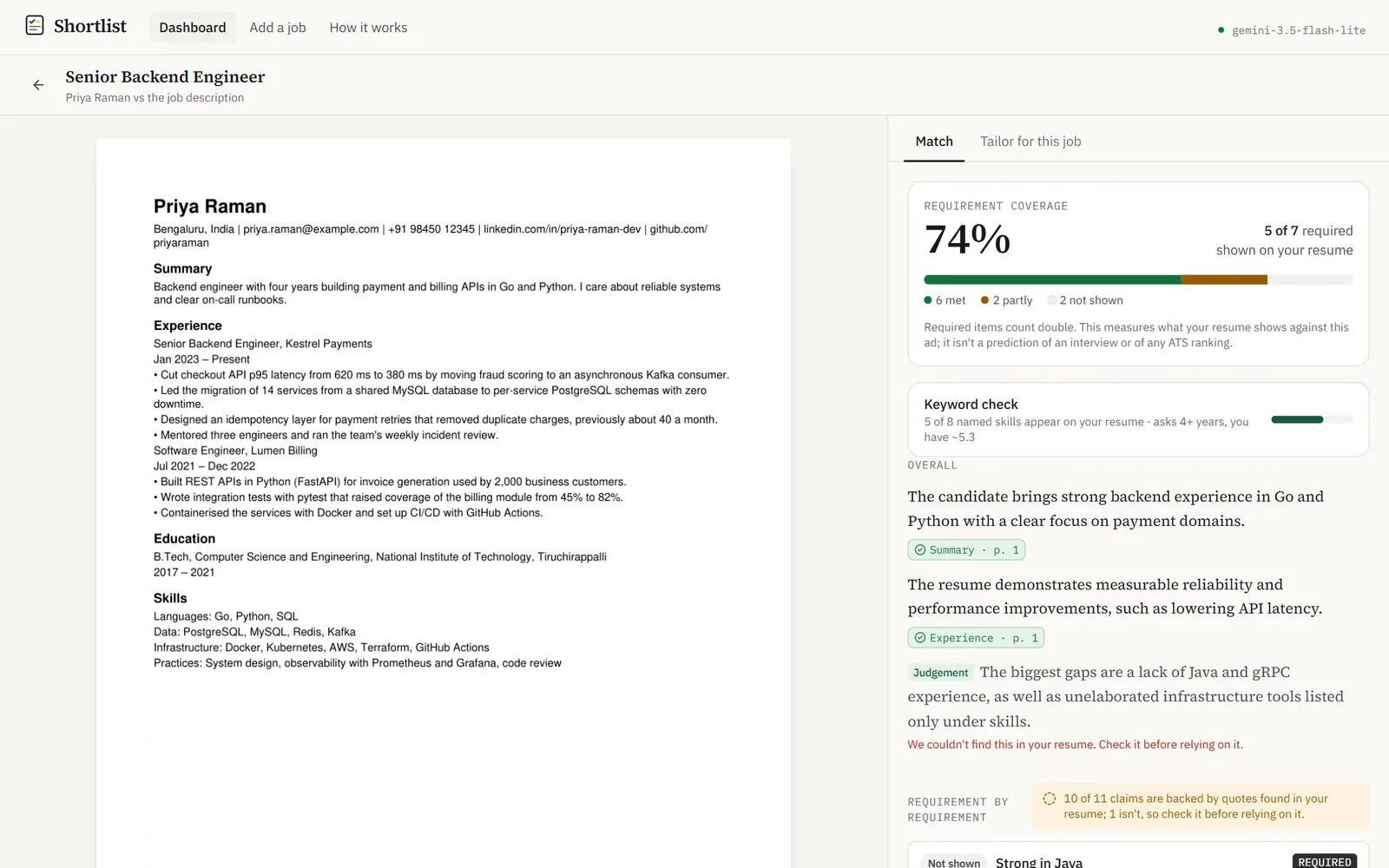
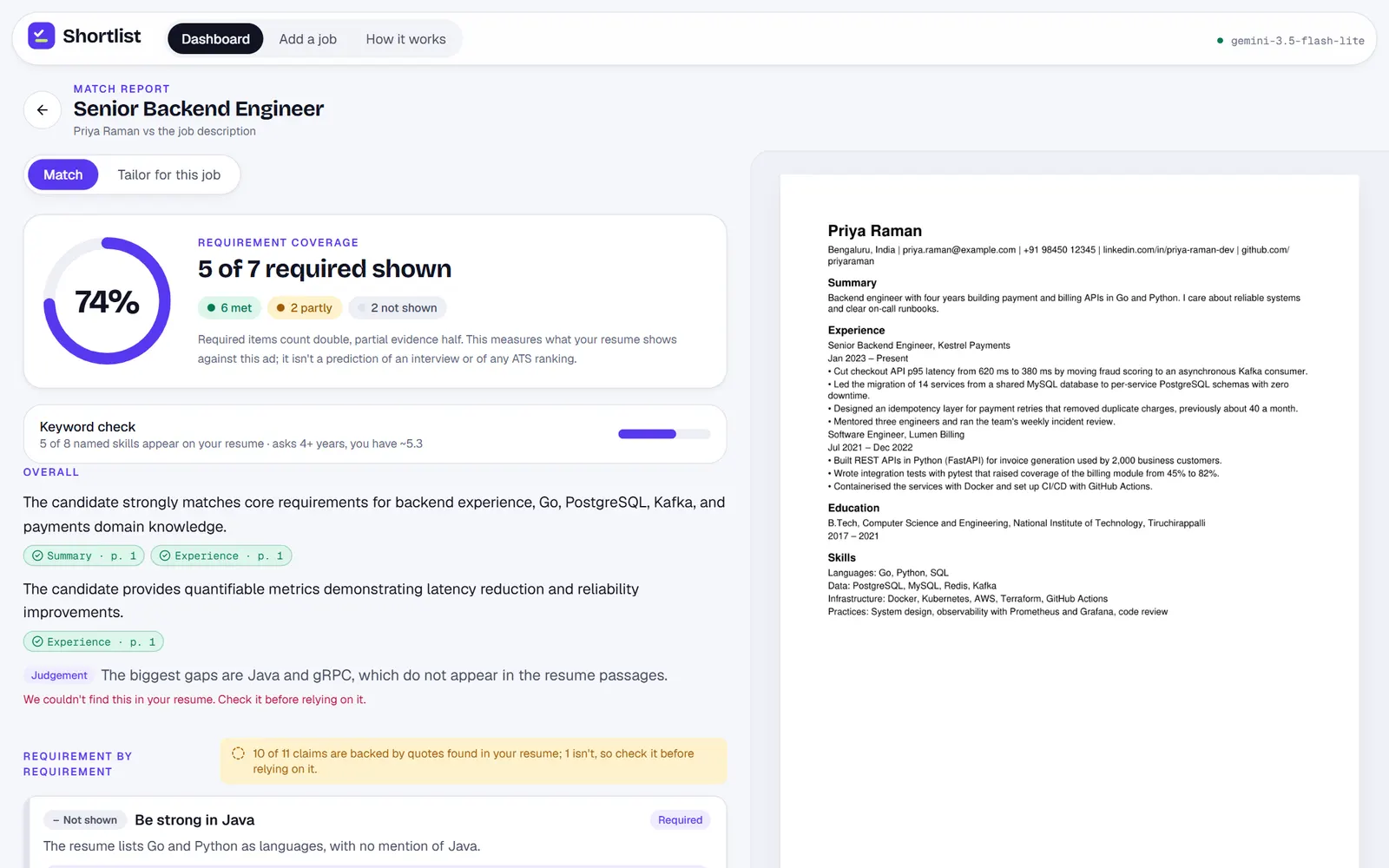
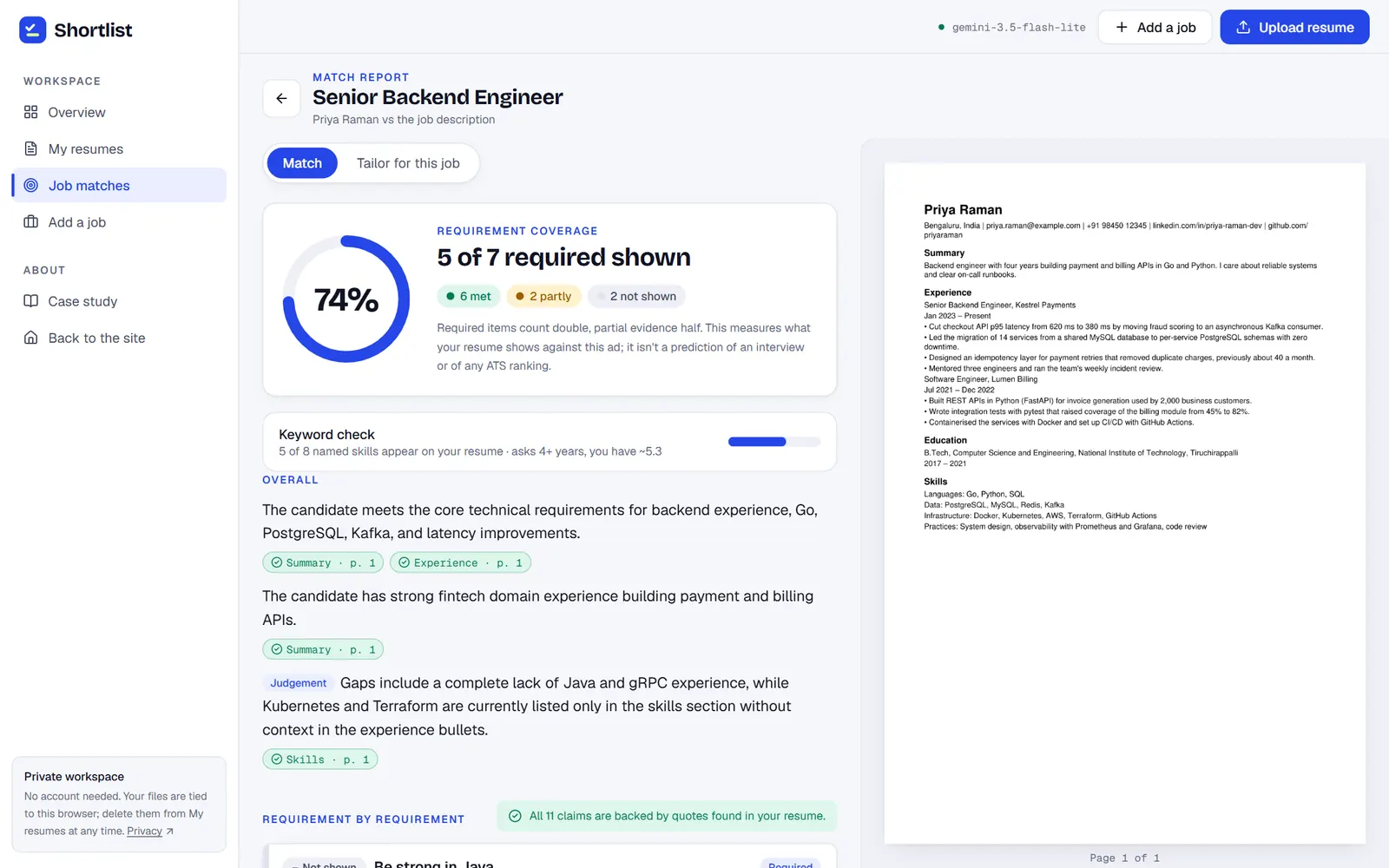
Real screens from the project's history, in order. Every stage was live.
 1 / 3 · First interface
The rebuilt product's first screens: an editorial serif look, with the match report beside the resume. It worked, but it looked almost identical to Margin.
06
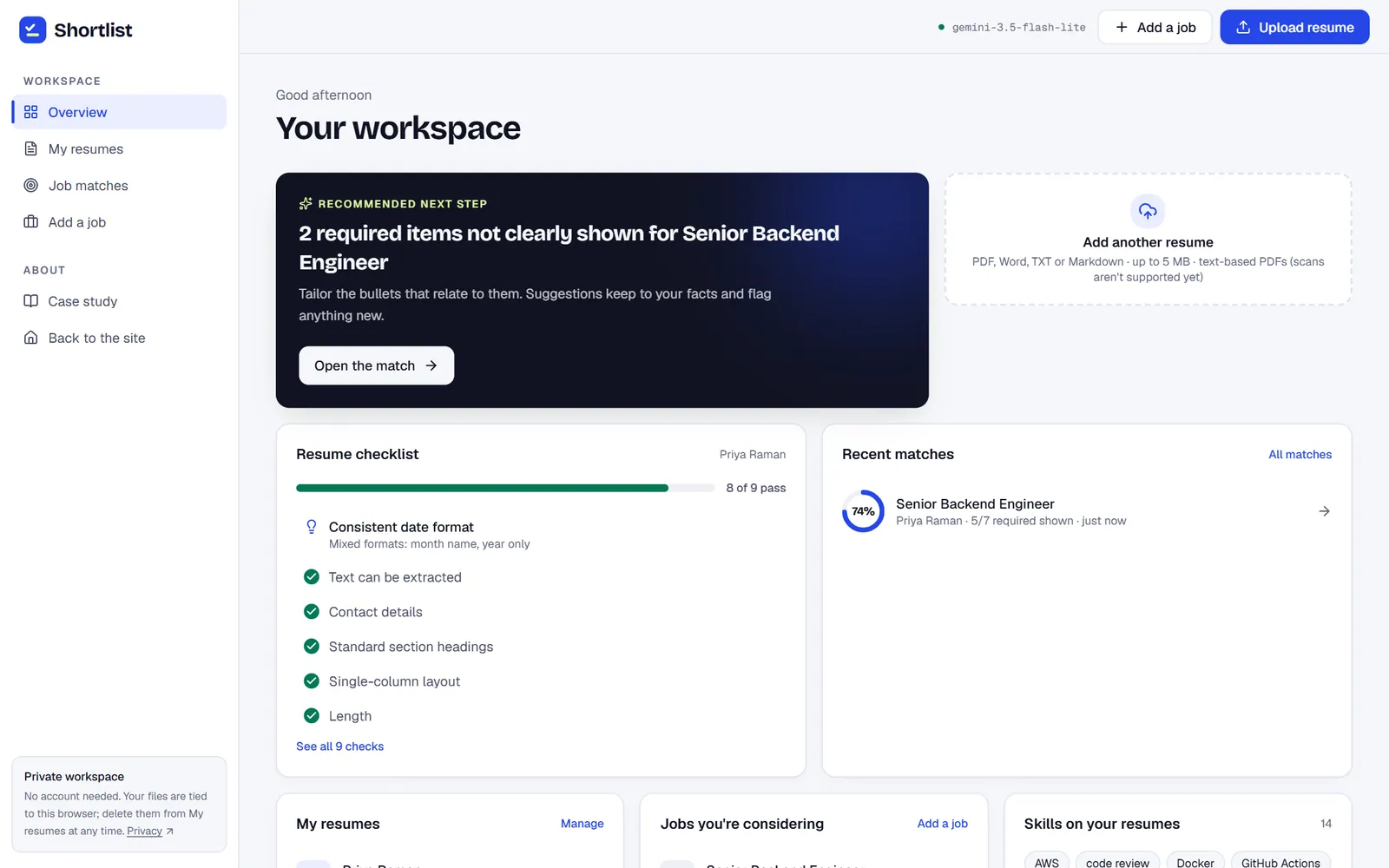
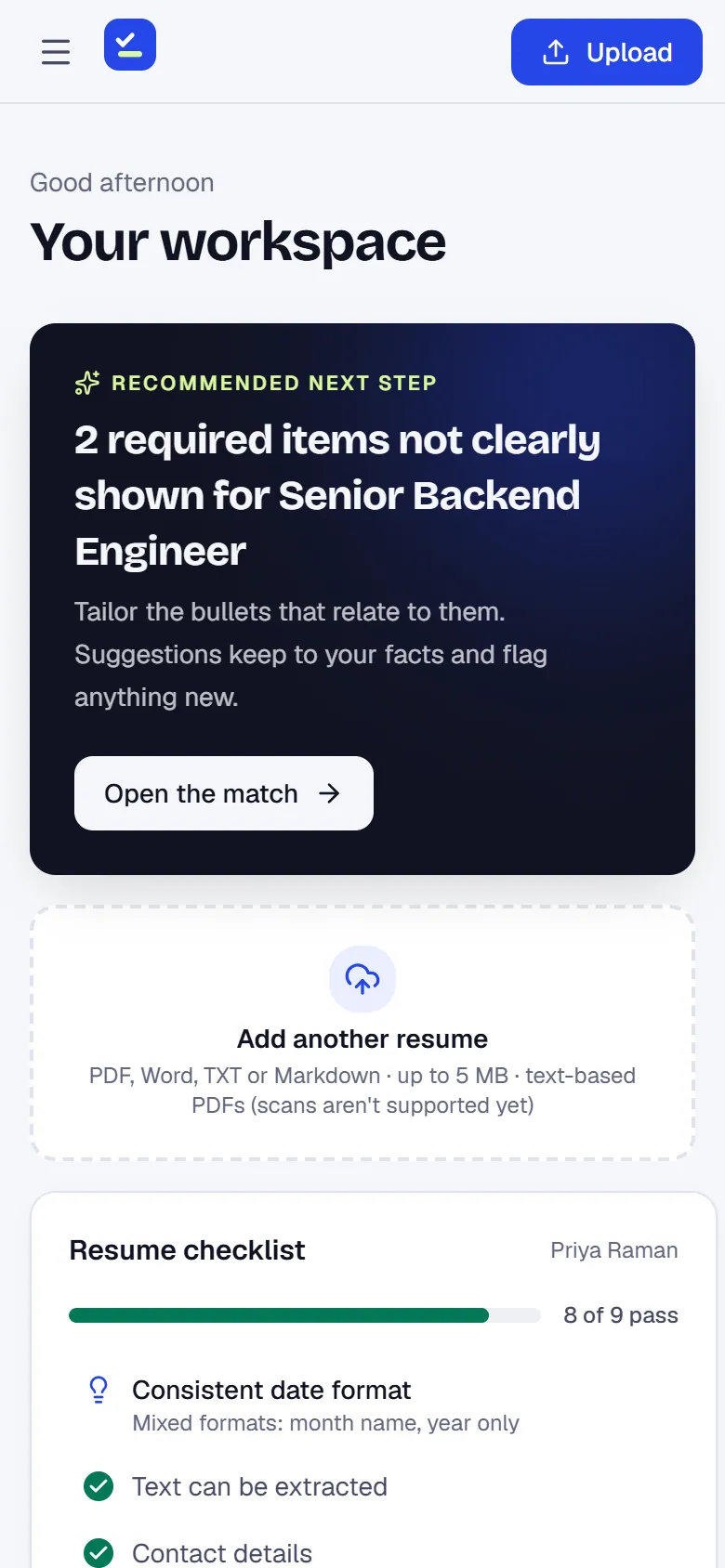
Real screens from the live product.
07
On upload · no AI
On match · one AI call
On upload · no AI · step 1
PDF / DOCX
File type detected from bytes; Word and PDF supported.
08
01
Structured outputs
Gemini returns typed JSON per requirement: verdict, quotes, reasoning. Prompts are versioned.
02
Grounding
Quotes must exist in the resume. Unverifiable evidence is downgraded in front of the user.
03
Guardrails on rewrites
Numbers not in the original and skills that appear nowhere on the resume are flagged beside each suggestion.
04
Adversarial tests
A fake model that misbehaves on purpose: invented evidence must be downgraded, inflated rewrites must be flagged.
09
From the README's evaluation tables. Six synthetic resumes, four job ads, 74 labels written by me: the change on known cases, not accuracy on unseen resumes.
10
Free hosting sleeps
The backend sleeps after idle minutes, so the first request can take up to a minute. The app shows a “waking the server” notice instead of failing silently.
Evaluating honestly
The test set was written by the same person who built v2, so the README says exactly that next to the numbers.
Resumes aren't text
Two-column PDFs and Word files read out of order; parsing had to be column-aware before any AI could help.
11
0.22 → 0.91
Requirement-matching accuracy, v1 to v2 with AI
0.97
Evidence F1: the right resume lines quoted
0
Missing requirements marked as met
6 / 6
Resume files parsed, including a two-column PDF and Word
Measured on six synthetic resumes and four job ads that I labelled myself while building v2. They show the change from v1 on known cases, not accuracy on unseen resumes.
12
Built with Claude Code under my direction: I set the product direction and requirements, and reviewed the design, code and evaluations.
Next project
Margin →
A document assistant you can check.